Ritual and music
Kun kru and the fight music
What the kun kru ritual is, how the live fight music works, why the tempo changes during a round and what to listen for from a ringside seat at Kun Khmer.
Reserve a ringside seat ↗Quick answer
Before a Kun Khmer bout each fighter performs a ritual called kun kru, which pays respect to his teachers and warms him up. A small live ensemble then plays, with an oboe-like instrument called the sralai carrying the melody over drums. The music has two parts: a slow opening for the ritual and a faster one for the fight, which speeds up through each round and stops when the round ends or a fighter is knocked out.
The ritual before the fight
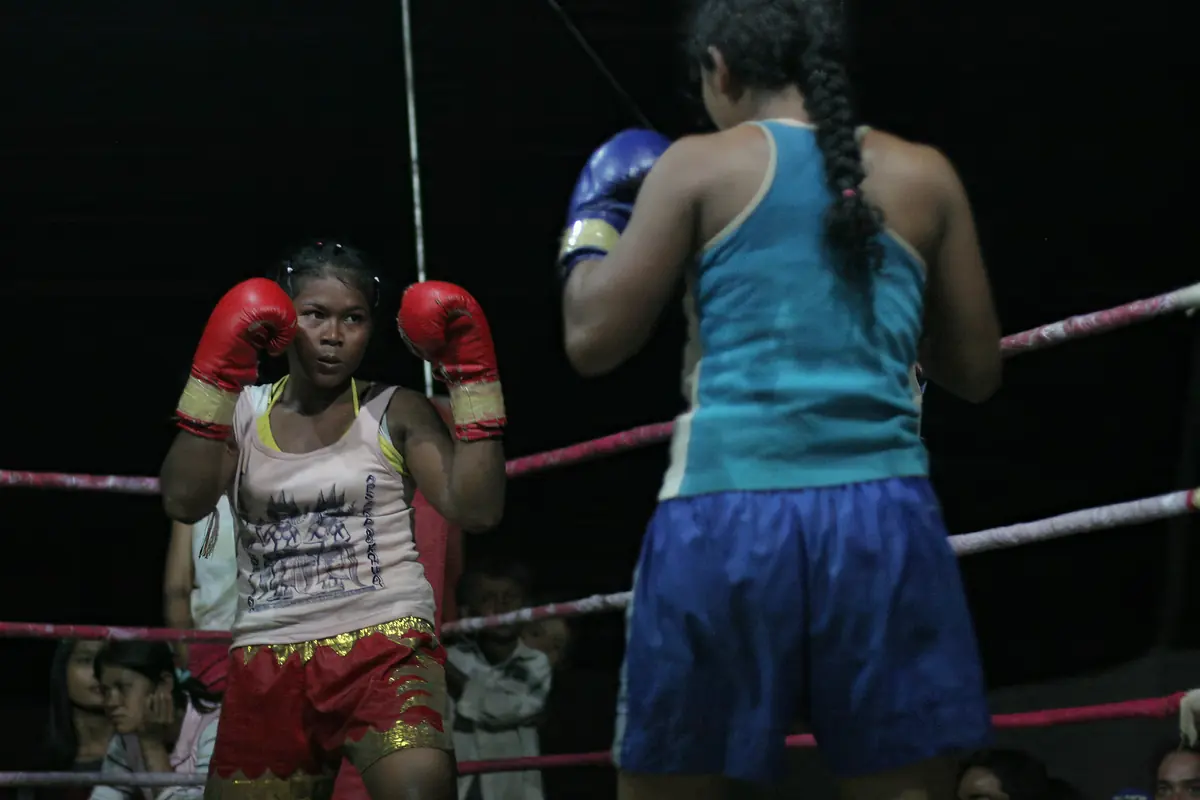
Each Kun Khmer match opens with kun kru, a ritual that pays homage to the fighter's spirit trainer and teachers and also serves as a warm-up. VICE described fighters bowing in the corners of the ring before a judge checked their gloves and a gong started the match. The ritual is a mark of respect that carries across the sport, and it happens at the start of each match. Wikipedia names it kun kru, or thvayobangkoum krou, and adds that grandmasters who keep the tradition are known as achar. For a first-time visitor it is the clearest sign that a Kun Khmer card is more than a series of fights.
Many versions, many stories
Wikipedia lists 17 variations of the ritual, many of them drawn from the Reamker, Cambodia's telling of the Ramayana epic. One is named Hanuman ties the bridge to Sita, after an episode of that story. In the same account the ritual honours the fighter's spirit trainer and warms the muscles, so it serves the body as well as the spirit. Fighters can open differently, which is one reason the first minutes of a bout repay close attention, even before a punch is thrown.
The ensemble
The music is called vung phleng pradal, roughly the boxing orchestra. It is played live by a small group: an oboe-like sralai carries the tune, and drums mark the beat. VICE saw the musicians wearing straw hats, on a small stage close to the audience, playing without a break while the fighters worked. The faster part is aligned with the flow of the match, so the sound is closer to an accompaniment than to a soundtrack. The same instruments carry the slow opening and the quick fight music, which is why the change in tempo is easy to hear.
Two parts, one tempo
The music has two parts. The first is slow and played freely, in the rubato style, to honour the teachers, with the sralai on the melody and a drum marking key points. The second is faster and belongs to the fight itself. It speeds up as each round goes on and stops at the end of the round or when a fighter is knocked out. In practice the tempo works as a gauge: when the music quickens, the action in the ring is quickening with it.
What to listen for
Listen first for the slow opening, then for the moment the music picks up as the bell goes. During a round, notice how the sralai and the drums speed up as the action does, and how the sound drops away when the round ends. If a fighter is knocked out, the music stops. Your driver explains the sport in English before you enter, so the first bout is the best time to listen, and to match what you were told with what you hear in the room.
Read next: Kun Khmer: rules and rituals
Close to the ring
VICE reported that live weekend matches at Phnom Penh television studios were free to attend, with spectators sitting close to the ring, and that crowds also gathered in bars and cafes to watch. The nearer your seat, the more the music and the crowd shape the evening. Plan on a noisy, close and fast evening, and arrive ready to take in the ritual before the first strike.
A living tradition
The ritual and the music tie the sport to older Khmer practice. UNESCO's description of Kun Lbokator, the related martial art it listed in 2022, notes that the art is still performed in ritual offerings to local deities and at festivals, alongside dance, music and traditional medicine. Kun Khmer in the ring is a separate, regulated sport, but it carries some of the same ceremony. That is the part of the evening that a ringside seat lets you see and hear at first hand.
Frequently asked questions
What is kun kru?
Kun kru is the ritual that opens a Kun Khmer match. The fighter pays homage to his teachers and also warms his muscles. Wikipedia lists many variations, several drawn from the Reamker.
What instruments play at a Kun Khmer fight?
A small live ensemble plays an oboe-like sralai and drums. The music starts slowly for the ritual and speeds up during each round.
Does the music stop during a bout?
Yes. It stops at the end of each round, and it also stops if a fighter is knocked out.
Sources